
Dental Crowns in Croydon
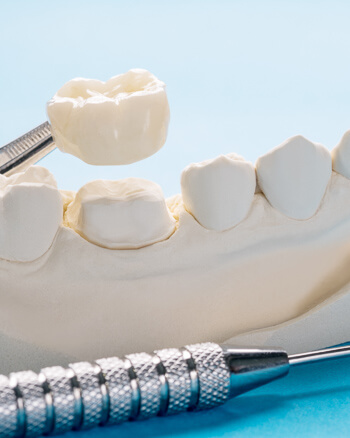 Protect and Restore Damaged Teeth With Custom-Made Dental Crowns
When a tooth becomes damaged, weakened, or heavily restored, it can leave you wondering what comes next. You may be concerned about discomfort, worried about further damage, or simply looking for a way to protect your tooth for the future.
At Croydon Dental Clinic, we provide dental crowns as part of our restorative and cosmetic dentistry services. As a local family-focused dental practice, we take a patient, unhurried approach to care. We know dental treatment can feel daunting, so we make time to explain your options clearly, answer your questions, and help you feel more prepared before moving forward.
New Patients
What Is a Dental Crown?
A dental crown is a custom-made covering that fits over a damaged or weakened tooth. Sometimes called a “cap,” it is designed to restore the tooth’s shape, strength, and appearance while helping protect it from further damage.
Crowns are recommended for a variety of reasons. A dentist may suggest a crown when a tooth has:
- Extensive decay
- A crack or fracture
- Undergone root canal treatment
- A large filling that no longer provides enough support
- Significant wear or damage
- Cosmetic concerns affecting appearance
Because a crown covers the entire visible portion of the tooth above the gumline, it can provide both functional and aesthetic benefits. The goal is to help the tooth continue functioning normally while blending naturally with your smile.
Dental crowns are a well-established treatment used by dentists every day. They can be suitable for many patients who have healthy gums and enough remaining tooth structure to support the crown. During your consultation, our team will assess your oral health, discuss your concerns, and explain whether a crown may be appropriate for your situation.
Types of Crowns Available
At Croydon Dental Clinic, we offer a range of crown materials to suit different needs, preferences, and budgets. The most suitable option will depend on factors such as the location of the tooth, cosmetic considerations, and how much strength is required.
Porcelain or All-Ceramic
Porcelain crowns are designed to closely resemble the appearance of natural teeth. Their tooth-coloured appearance makes them a popular option for front teeth and other visible areas of the smile.
These crowns are durable, resistant to staining, and provide excellent aesthetic results for many patients. They are commonly chosen for both restorative and cosmetic purposes.
Porcelain-Fused-to-Metal (PFM)
PFM crowns combine a metal substructure with a porcelain outer layer. This design provides strength while maintaining a natural-looking appearance.
They have been used successfully for many years and can be a suitable option for back teeth that experience greater chewing forces. In some cases, a thin metal line may become visible near the gumline over time.
Zirconia
Zirconia crowns have become increasingly popular due to their combination of strength and aesthetics. They are highly durable while remaining tooth coloured, making them suitable for both front and back teeth.
Many patients appreciate zirconia because it offers a balance between appearance and long-term durability.
Metal
Metal crowns are exceptionally strong and can withstand heavy chewing forces. For this reason, they are often used on back molars where appearance is less of a concern.
While they are not typically chosen for visible teeth, they remain a reliable restorative option in certain situations.
What to Expect
Every crown begins with a consultation and assessment. This allows us to examine your tooth, discuss your concerns, and determine whether a crown is likely to be the most suitable option.
If a crown is recommended, the tooth is carefully prepared so the crown can fit comfortably and securely. We then take impressions or digital scans, which are used to create a custom crown designed specifically for your tooth.
Because permanent crowns take time to manufacture, a temporary crown is often placed while your final restoration is being made.
Once your custom crown is ready, you’ll return to the practice so it can be fitted and checked for comfort, appearance, and function. Adjustments can be made if required before the crown is permanently secured.
A review appointment may also be recommended to ensure everything is functioning as expected.
Crowns vs Other Options
Patients often ask whether they need a crown or if another treatment could achieve a similar result.
In some situations, a filling may provide enough support for a damaged tooth. In others, treatments such as veneers, inlays, or onlays may be considered. The most appropriate option depends on factors such as the amount of remaining tooth structure, the location of the tooth, and your overall goals.
For example, veneers are generally used to improve the appearance of front teeth, while crowns are often recommended when additional strength and protection are required. Likewise, smaller areas of damage may sometimes be managed with fillings or onlays rather than a full crown.
Frequently Asked Questions
How long do dental crowns last?
How many appointments does a crown take?
How much do dental crowns cost in Australia?
Are crowns covered by health insurance?
Considering a Dental Crown?
If you have a damaged, weakened, or heavily restored tooth, a dental crown may be one option worth exploring. Our team is here to answer your questions, explain the process, and help you understand your treatment options in a relaxed and welcoming environment.
Call (03) 8203 2818 or book online to arrange a consultation at our Croydon practice.
